
Florida is one of those states where starting a business feels realistic for many people.
You have local service businesses in Tampa, ecommerce sellers in Miami, consultants in Orlando, real estate investors in Jacksonville, tourism-related businesses near the coast, and remote founders working from home across the state.
Florida has no personal state income tax, a large customer base, and a business environment that attracts both local and out-of-state entrepreneurs.
But forming a Florida LLC is not just about paying the state fee and getting a confirmation email.
You need to choose a proper name, appoint a registered agent, file Articles of Organization, create an operating agreement, get an EIN, open a business bank account, check licenses, understand taxes, and file your annual report on time every year.
Florida makes the filing process fairly simple through Sunbiz, but the annual report deadline is where many owners get caught. Miss it, and the late fee is painful.
This guide explains how to start an LLC in Florida in plain English.
What Is a Florida LLC?
A Florida LLC is a limited liability company formed under Florida state law.
It gives your business a separate legal identity from you personally. If the LLC is properly formed and maintained, it may help protect your personal assets from business debts, lawsuits, and claims.
A Florida LLC can have one owner or several owners. The owners are called members.
Florida LLCs are used for many types of businesses, including:
- Local service businesses
- Ecommerce stores
- Real estate businesses
- Consulting agencies
- Cleaning companies
- Restaurants
- Digital marketing agencies
- Freelance businesses
- Tourism businesses
- Rental property businesses
- Online businesses
- Professional services
The LLC structure is popular because it is flexible. You can run a simple one-person business or build a larger company with multiple members.
But the LLC only helps when you keep it properly organized.
Why Form an LLC in Florida?
Florida is attractive for many entrepreneurs because it has a large economy, strong population growth, and no personal state income tax.
For small business owners, that can make Florida feel like a practical place to operate.
A Florida LLC may be useful if:
- You live in Florida
- You operate your business from Florida
- Your customers are mainly in Florida
- You own Florida real estate
- You run a local service business
- You want a simple state filing process
- You want a formal business structure
- You want to separate business and personal finances
- You want to look more professional to clients and vendors
If your business is actually based in Florida, forming a Florida LLC is usually cleaner than forming in Delaware, Wyoming, or Nevada and then registering back into Florida.
For many Florida-based businesses, the home-state LLC is the practical choice.
Step 1: Decide If Florida Is the Right State
Before filing, ask where your business actually operates.
If you live in Florida and run the business from Florida, forming a Florida LLC usually makes sense.
If you live in another state but want to form in Florida only because it sounds business-friendly, be careful. Your home state may still require registration if you operate there.
For example, if you live in Georgia and run your entire business from Georgia, forming a Florida LLC may not avoid Georgia rules. You may still need to register the Florida LLC as a foreign LLC in Georgia.
You may be considered to be doing business in a state if you:
- Work from that state
- Have employees there
- Store inventory there
- Meet clients there
- Own or lease property there
- Operate an office there
- Provide services there
- Manage business operations there
Florida is a good choice when your real business activity is in Florida.
If the business is not actually tied to Florida, compare the full cost before choosing it.
Step 2: Choose a Name for Your Florida LLC
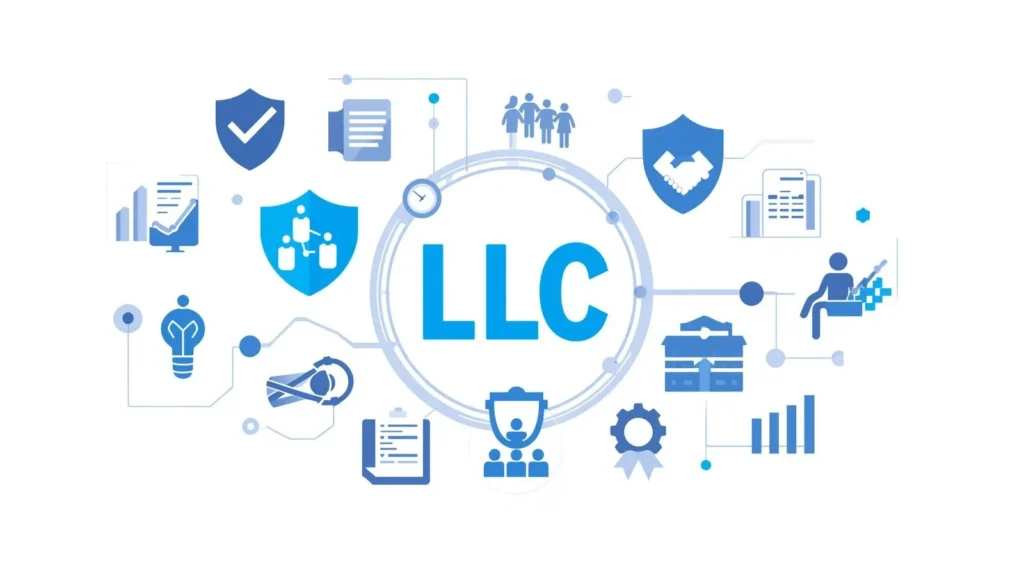
Your LLC needs a legal name.
The name must be distinguishable from other businesses registered in Florida. It must also include an LLC designator such as:
- LLC
- L.L.C.
- Limited Liability Company
For example:
- GulfEdge Marketing LLC
- PalmRoute Consulting LLC
- BrightHarbor Services LLC
- SunCoast Digital LLC
Before filing, search the Florida Division of Corporations database on Sunbiz to see if your name is available.
Also check:
- Domain availability
- Social media handles
- Trademark conflicts
- Spelling clarity
- Brand flexibility
- Whether the name fits your future plans
A name can be available in Florida but still create trademark issues if it is too close to an existing brand.
Do not choose a name only because the state database allows it.
If you plan to build a serious brand, check trademark risk before filing.
Step 3: Choose a Florida Registered Agent
Every Florida LLC must have a registered agent.
A registered agent receives official state mail, legal notices, and service of process for your LLC.
The registered agent must have a physical street address in Florida.
You can act as your own registered agent if you live in Florida and have a Florida street address. But many owners hire a professional registered agent service.
A professional registered agent may be useful if:
- You work from home
- You do not want your home address on public records
- You travel often
- You do not keep normal business hours
- You want official documents scanned and sent to you
- You want compliance reminders
- You formed in Florida but live elsewhere
A registered agent is not the owner of your LLC. They do not control your business. They only receive official documents on behalf of the company.
Choose someone reliable. Missing legal notices can create serious problems.
Step 4: File Articles of Organization

To create your Florida LLC, you file Articles of Organization with the Florida Division of Corporations.
This is done through Sunbiz, Florida’s business filing system.
The Articles of Organization usually include:
- LLC name
- Principal office address
- Mailing address
- Registered agent name
- Registered agent address
- Registered agent signature or acceptance
- Member or manager information, if listed
- Effective date, if different
- Organizer name and signature
The current Florida LLC filing cost is $125 total. This includes the $100 filing fee and the $25 registered agent designation fee.
You can file online, which is usually the easiest method.
After approval, your Florida LLC officially exists.
Download and save the approved documents immediately.
Step 5: Decide Whether Your LLC Is Member-Managed or Manager-Managed
Florida asks about your LLC’s management structure.
An LLC can be member-managed or manager-managed.
A member-managed LLC means the owners run the business directly.
A manager-managed LLC means one or more managers run the business. The manager may be a member or someone hired to manage the company.
Most small LLCs are member-managed.
This may fit if:
- You are the only owner
- All owners are active in the business
- The members make daily decisions
- The business is simple
A manager-managed structure may fit if:
- Some owners are passive investors
- One person runs daily operations
- You want cleaner management authority
- The business has several members
- You hire someone to manage the company
Think carefully before choosing.
Your operating agreement should match the management structure you select.
Step 6: Save Your Florida LLC Documents

After the state approves your LLC, save your documents.
Keep copies of:
- Approved Articles of Organization
- Filing confirmation
- Payment receipt
- Registered agent information
- Any certificate requested
- Any Sunbiz filing confirmation
Create a folder for your LLC records.
You may need these documents when opening a bank account, applying for an EIN, getting licenses, working with vendors, or filing taxes.
Do not leave everything buried in email.
Download the documents and store them in more than one place.
Step 7: Create an Operating Agreement
An operating agreement is the internal rulebook for your LLC.
Florida does not require you to file it with the state, but you should still have one.
For a single-member Florida LLC, the operating agreement confirms that you are the only owner and have authority to manage the business.
For a multi-member Florida LLC, it explains ownership, voting, profit sharing, duties, exits, transfers, and dispute rules.
A strong operating agreement may include:
- LLC name
- Formation state
- Business purpose
- Member names
- Ownership percentages
- Management structure
- Capital contributions
- Profit and loss rules
- Voting rights
- Banking authority
- Tax classification
- Buyout rules
- Transfer rules
- Dissolution rules
Banks may ask for this document before opening a business account.
If you have partners, do not skip it. Money and control issues can become messy without written rules.
Step 8: Get an EIN from the IRS

An EIN is your business tax ID number.
You may need it to:
- Open a business bank account
- Hire employees
- Set up payroll
- File certain tax returns
- Apply for business credit
- Work with payment processors
- Register for state taxes
- Apply for business licenses
You can get an EIN for free directly from the IRS.
If you are a U.S.-based owner with an SSN or ITIN, the online process is often quick.
If you are a non-U.S. resident without an SSN or ITIN, the online EIN application may not work. You may need to apply using Form SS-4.
Apply after your Florida LLC is approved so your EIN record matches your exact LLC name.
Save the EIN confirmation letter. Banks often ask for it.
Step 9: Open a Business Bank Account
Once your Florida LLC is approved and you have your EIN, open a business bank account.
This step matters because your LLC should have separate finances.
Do not mix personal and business money.
A business bank account helps you:
- Receive client payments
- Pay business expenses
- Track income
- Track deductions
- Prepare taxes
- Build business banking history
- Keep records clean
- Support liability separation
Banks may ask for:
- Articles of Organization
- EIN confirmation letter
- Operating agreement
- Owner ID
- Business address
- Registered agent information
- Beneficial ownership details
- Business license, if required
Use the account only for business.
If you need money personally, transfer it properly as owner draw, distribution, or payroll depending on your tax setup.
Step 10: Check Florida Business License Requirements

Forming an LLC does not automatically give you permission to operate every type of business.
Florida businesses may need state, county, city, or industry-specific licenses.
You may need a license or permit if you operate a:
- Restaurant
- Salon
- Construction business
- Real estate business
- Healthcare business
- Cleaning company
- Retail store
- Food business
- Professional service
- Childcare business
- Tourism-related business
- Contractor business
Some Florida counties and cities require local business tax receipts.
If your business sells taxable goods or certain services, you may need sales tax registration.
Check your city, county, and industry rules before operating.
Your LLC filing creates the company. Licenses give you permission to conduct certain activities.
Step 11: Understand Florida Annual Reports
Florida LLCs must file an annual report every year to stay active.
The filing window runs from January 1 to May 1.
The annual report updates or confirms your LLC’s information with the state.
The current Florida LLC annual report fee is $138.75.
If you file after May 1, the cost becomes $538.75 because Florida adds a $400 late fee.
This late fee is one of the biggest Florida LLC mistakes.
The annual report usually confirms or updates:
- Principal office address
- Mailing address
- Registered agent
- Registered office
- Member or manager details
- Email address
- Business status
Even if nothing changed, you still need to file.
Put the deadline on your calendar as soon as your LLC is approved.
Step 12: Understand Florida Taxes

Florida does not have personal state income tax.
That is one reason business owners like the state.
But your LLC may still have tax responsibilities.
Depending on your business, you may need to deal with:
- Federal income tax
- Self-employment tax
- Sales tax
- Payroll tax
- Florida corporate income tax if taxed as a corporation
- Local business tax
- Reemployment tax if you have employees
- Industry-specific taxes
For federal tax purposes, a single-member LLC is usually treated as a disregarded entity by default unless it elects otherwise.
A multi-member LLC is usually taxed as a partnership by default unless it elects otherwise.
Your LLC can also elect S-Corp or C-Corp taxation if eligible.
If your business becomes profitable, ask a CPA whether S-Corp taxation makes sense.
Step 13: Register for Florida Sales Tax If Needed
If your LLC sells taxable goods or certain taxable services, you may need to register with the Florida Department of Revenue.
This is common for:
- Retail stores
- Ecommerce sellers
- Physical product businesses
- Marketplace sellers
- Certain service businesses
- Rental businesses
- Hospitality businesses
Sales tax can be tricky for online sellers because customers may be in many states.
If you sell through marketplaces, the marketplace may collect tax in some cases, but you may still have filing or registration duties depending on your setup.
Do not guess on sales tax.
If you sell physical products or taxable services, review the rules early.
Step 14: Know About BOI Reporting

Beneficial ownership reporting rules changed, so avoid relying on old advice.
Under current federal guidance, U.S.-created domestic companies are exempt from federal BOI reporting to FinCEN.
That means a Florida LLC created in the United States is currently not required to file a federal BOI report only because it was formed.
However, banks and payment processors may still ask for beneficial ownership information.
You should still keep ownership records clean.
Your operating agreement should clearly show who owns and controls the LLC.
If a foreign company registers to do business in the U.S., different BOI rules may apply.
Step 15: Keep Business and Personal Finances Separate
After forming your Florida LLC, treat it like a real business.
This means:
- Use a business bank account
- Keep receipts
- Track income and expenses
- Sign contracts in the LLC name
- Avoid paying personal bills from the LLC account
- Keep business records organized
- Maintain required licenses
- File annual reports on time
- Keep your registered agent active
An LLC gives you a structure, but your daily habits keep that structure strong.
If you mix personal and business money, your records become messy and your liability separation may become weaker.
How Much Does It Cost to Start a Florida LLC?
Here is a simple breakdown.
| Cost Type | Estimated Cost |
|---|---|
| Articles of Organization Filing Fee | $100 |
| Registered Agent Designation Fee | $25 |
| Total Florida LLC Formation Cost | $125 |
| Annual Report | $138.75 |
| Late Annual Report | $538.75 |
| Operating Agreement | Free template, paid template, or attorney-drafted |
| EIN | Free from IRS |
| Registered Agent Service | Optional if you hire a provider |
| Business License or Local Tax Receipt | Depends on location and industry |
| Formation Service | Optional |
| Foreign LLC Registration | Only if operating outside Florida |
The formation cost is not the only cost.
The annual report fee and deadline matter every year.
Should You Use an LLC Formation Service?
You can form a Florida LLC yourself through Sunbiz.
The process is straightforward for many business owners.
However, you may use a formation service if you want help with:
- Name search
- Filing Articles of Organization
- Registered agent service
- Operating agreement template
- EIN assistance
- Compliance reminders
- Annual report support
- Business license research
A service can save time, but it may also add costs.
Do not buy every add-on automatically.
Some add-ons are useful. Others may not be needed right away.
If you are comfortable with basic forms, DIY filing may be enough. If you want convenience, a service can help.
Florida LLC for Non-U.S. Residents
A non-U.S. resident can often own a Florida LLC.
This may be useful if you operate a U.S.-focused online business, ecommerce store, agency, consulting business, or investment structure.
Non-U.S. founders usually need:
- Florida registered agent
- Articles of Organization
- Operating agreement
- EIN
- Business bank account or fintech account
- Tax filing plan
- Annual report calendar
The EIN process may take longer if you do not have an SSN or ITIN.
Also, foreign-owned U.S. LLCs may have special IRS reporting duties, even when no income tax is due.
If you are a non-U.S. founder, speak with a tax professional who understands foreign-owned U.S. LLCs.
Florida LLC Pros and Cons
Pros
- Simple online filing through Sunbiz
- No personal state income tax
- Strong business environment
- Good for local service businesses
- Good for real estate investors
- Useful for ecommerce and online businesses
- Flexible management structure
- Large customer base
- Familiar state for banks and business services
- Reasonable formation cost
Cons
- Annual report required every year
- Late annual report fee is high
- Registered agent address may appear in public records
- Local licenses may be required
- Sales tax rules may apply
- Not always ideal if you do not operate in Florida
- Annual compliance can be missed if not tracked
Common Mistakes to Avoid
1. Missing the Annual Report Deadline
Florida’s annual report deadline is serious.
File between January 1 and May 1 to avoid the $400 late fee.
2. Thinking No State Income Tax Means No Taxes
Florida has no personal state income tax, but federal taxes, sales tax, payroll tax, and local taxes may still apply.
3. Skipping the Operating Agreement
Even single-member LLCs should have one.
Banks may ask for it, and it helps prove ownership.
4. Using Your Home Address Without Thinking
Florida records can be public. If privacy matters, consider registered agent and business address options carefully.
5. Forgetting Local Licenses
Your state LLC filing does not replace county or city licenses.
Check local rules.
6. Mixing Personal and Business Money
Open a business bank account and keep finances separate.
7. Choosing Florida Without Operating There
If your business is not actually tied to Florida, another state may make more sense.
Florida LLC Checklist
Use this checklist:
| Step | Task |
|---|---|
| 1 | Decide if Florida is the right state |
| 2 | Search and choose your LLC name |
| 3 | Choose a Florida registered agent |
| 4 | File Articles of Organization on Sunbiz |
| 5 | Save approval documents |
| 6 | Create an operating agreement |
| 7 | Apply for an EIN |
| 8 | Open a business bank account |
| 9 | Check local licenses and permits |
| 10 | Register for sales tax if needed |
| 11 | Understand federal and Florida tax duties |
| 12 | Add annual report deadline to calendar |
| 13 | Keep records and finances separate |
FAQs About Starting an LLC in Florida
How much does it cost to start a Florida LLC?
The current Florida LLC formation cost is $125 total. This includes a $100 filing fee and a $25 registered agent designation fee.
Does Florida require an annual report for LLCs?
Yes. Florida LLCs must file an annual report every year to keep active status.
When is the Florida LLC annual report due?
Florida annual reports are due between January 1 and May 1 each year.
How much is the Florida LLC annual report fee?
The current annual report fee for a Florida LLC is $138.75.
What happens if I file the annual report late?
If you file after May 1, Florida adds a $400 late fee, making the total $538.75.
Do I need a Florida registered agent?
Yes. Every Florida LLC must have a registered agent with a Florida street address.
Does Florida have state income tax?
Florida does not have personal state income tax, but other taxes may still apply depending on your business.
Can a non-U.S. resident form a Florida LLC?
Yes, in many cases. Non-U.S. residents can own Florida LLCs, but they should handle EIN, banking, tax filings, and annual reports carefully.
Final Thoughts
Starting an LLC in Florida is not hard, but it should be done carefully.
The steps are simple: choose a name, appoint a registered agent, file Articles of Organization, create an operating agreement, get an EIN, open a business bank account, check licenses, and file your annual report every year.
Florida can be a strong choice if you live there, operate there, own property there, or run a business connected to the state.
The biggest thing to remember is the annual report deadline.
File between January 1 and May 1 every year. Missing that deadline can turn a simple $138.75 filing into a $538.75 problem.
A Florida LLC can give your business a clean legal structure, but only if you maintain it properly.
Keep your records organized, separate your money, track your taxes, and stay ahead of state deadlines.
That is how you build an LLC that actually supports your business instead of creating future cleanup work.